
Abortion is Healthcare


Let’s cure a pound of patriarchy, shall we?
The Earth revolves around the Sun. Ocean tides move with the gravitational pull of the Moon. Left is left and right is right. These are indisputable truths or facts, if you will. One can either accept or reject facts, but I don’t know of anyone (personally) who rejects any of these.
Fact: abortion is healthcare.** While there are those who reject this fact, it is absurd to do so. I envision a world where rejecting this fact is as unthinkable as rejecting the fact that the Earth revolves around the Sun.
Let’s break it down:
Wikipedia’s definition of healthcare (consistent with Merriam-Webster and Cambridge Dictionary): noun Health care, or healthcare, is the improvement or maintenance of health via the prevention, diagnosis, treatment, amelioration or cure of disease, illness, injury, and other physical and mental impairments in people.
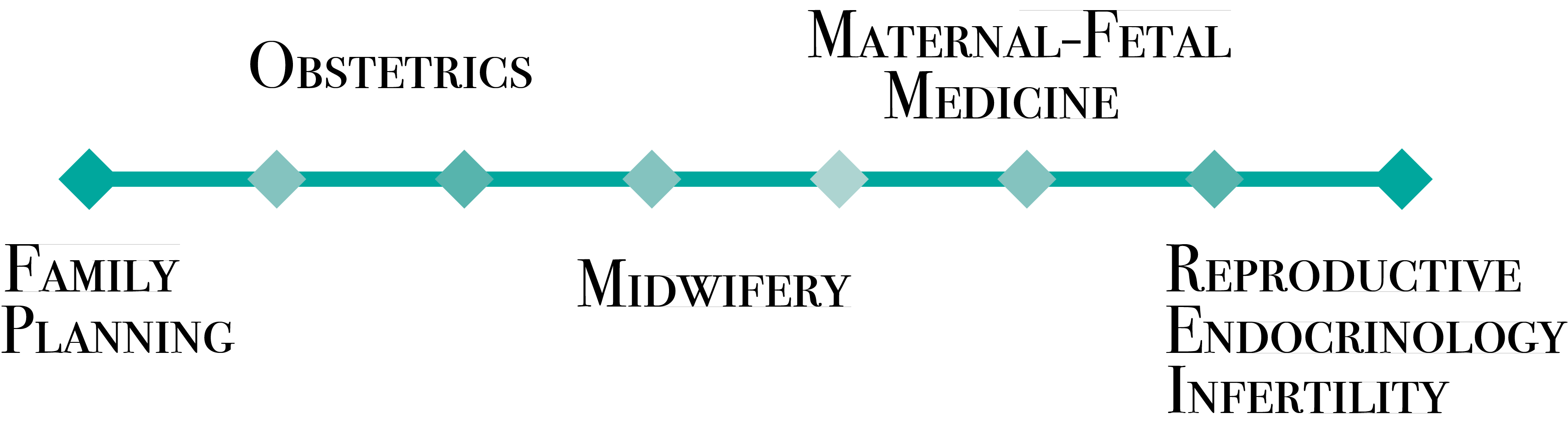
I prefer the less ableist term “condition” as opposed to “impairment.” I think we can all agree that healthcare treats conditions in order to improve things like health, well-being, and quality of life. There are entire fields of medicine dedicated to the condition of pregnancy—why is that? It is precisely because pregnancy is a condition that poses risks to health and life. As such, we have fields of medicine such as: obstetrics, midwifery, maternal-fetal medicine, reproductive endocrinology and infertility, and family planning. Within those fields are spectra of care, of course, but here we see the spectrum of healthcare that exists specifically for pregnancy-capable people:
There are people who are not pregnant and want to become so. There are people who are pregnant and do not want to be so. And there are folks in between. All require reproductive healthcare to stay as safe and healthy as possible regarding the condition of pregnancy. One hundred percent of pregnancies carry risks to health and life because the condition of pregnancy changes the physiology of the pregnant person. Once someone is pregnant, their body begins to change on a molecular level and ultimately these changes pose risks during the pregnancy as well as during and after giving birth. We have a vital statistic known as the maternal mortality rate: the number of maternal deaths per 100,000 live births. A maternal death is considered death while pregnant or within 42 days of termination of being pregnant. We mathematically concede that pregnancy can be deadly, so how can there be any question that abortion is healthcare? Pregnancy can also cause lifelong morbidity, anything from pelvic pain to heart failure and too many other conditions to list. Of course pregnancy (and/or giving birth) does not always cause death, nor does it always cause morbidity—but it always causes changes in physiology that carry risks to health and life. Below is an incomprehensive list of all the ways pregnancy alters one’s body and physiology, as well as the potential morbidities that can occur (notwithstanding the possibility of death).
Physiologic Changes of Pregnancy [1]
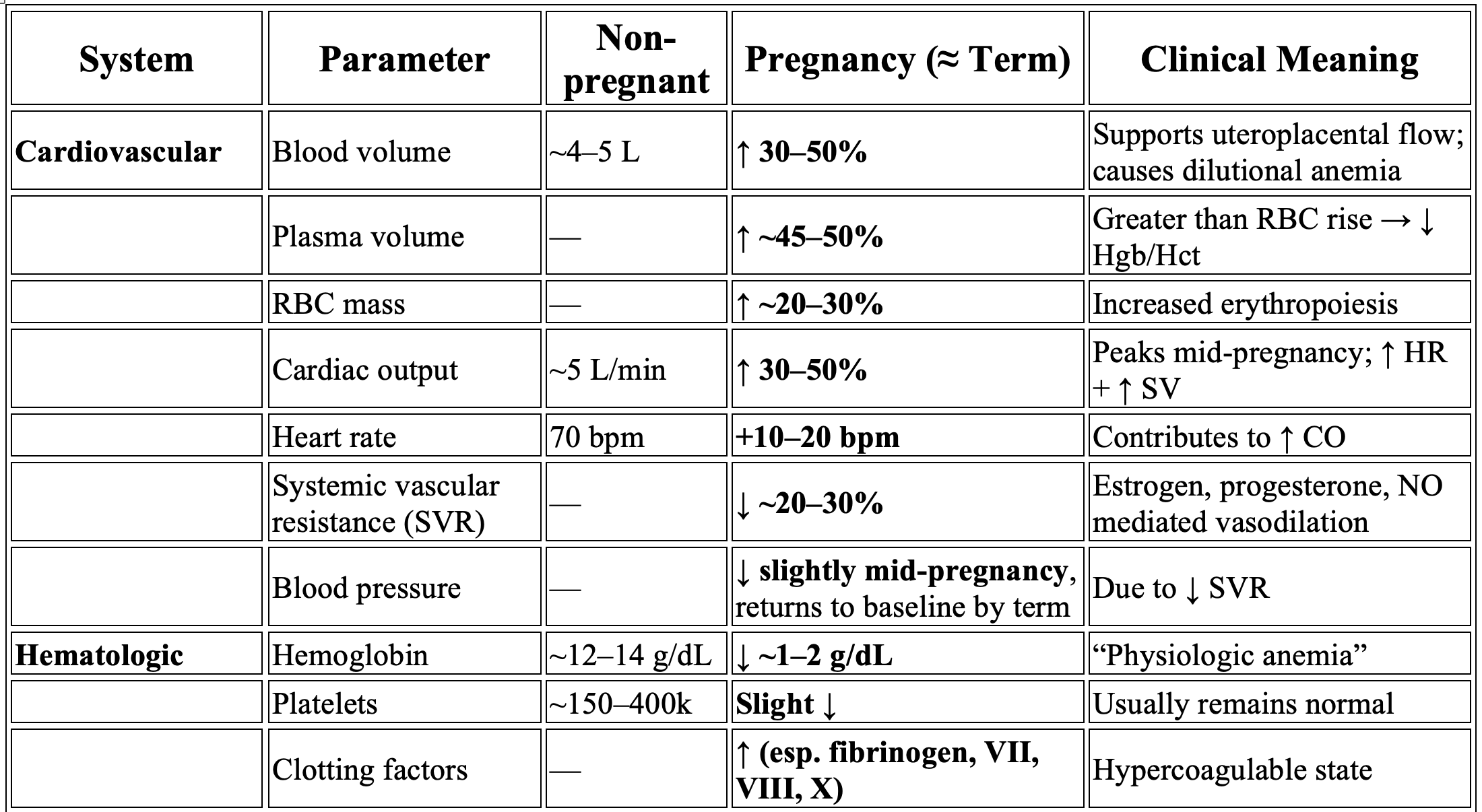
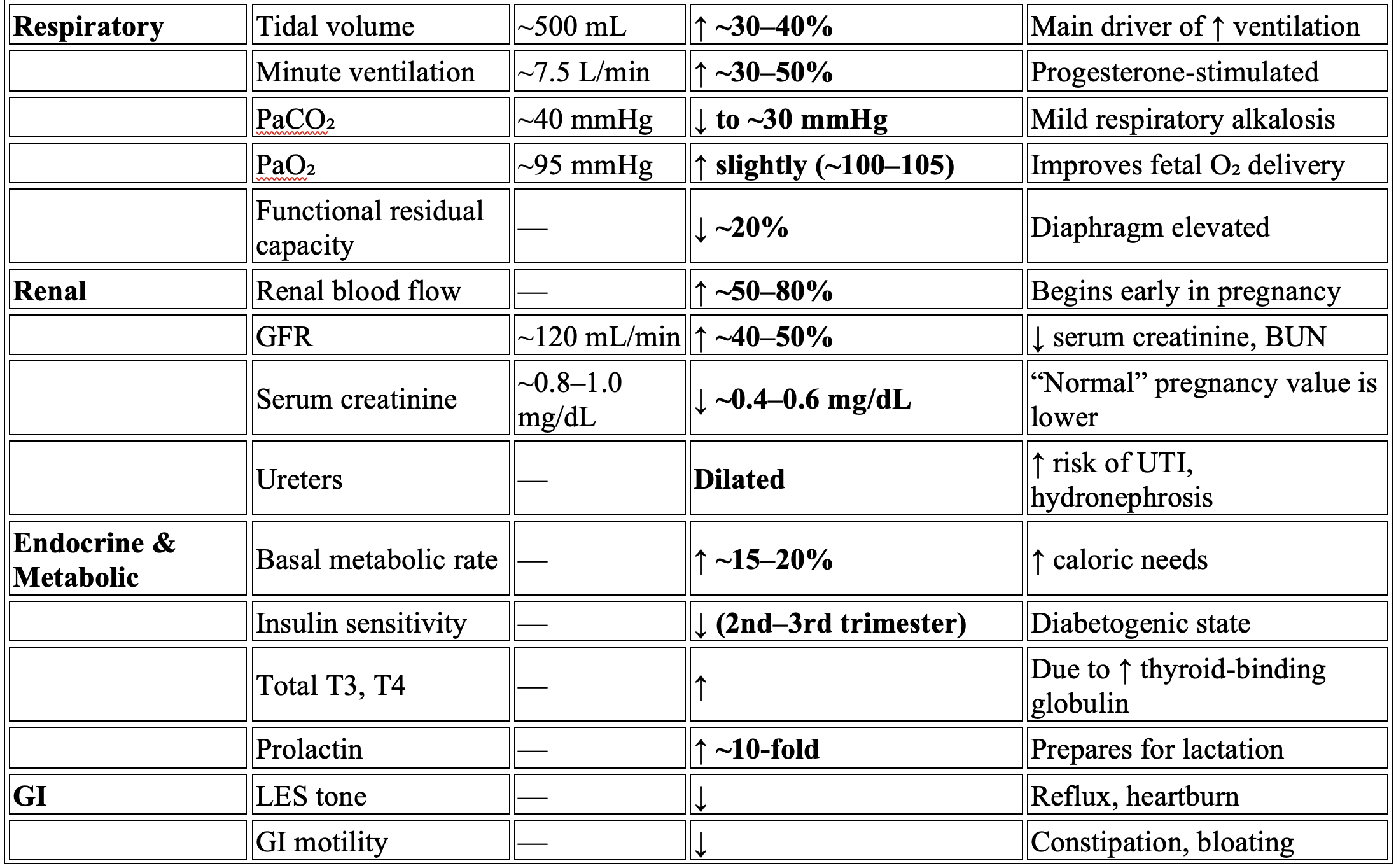
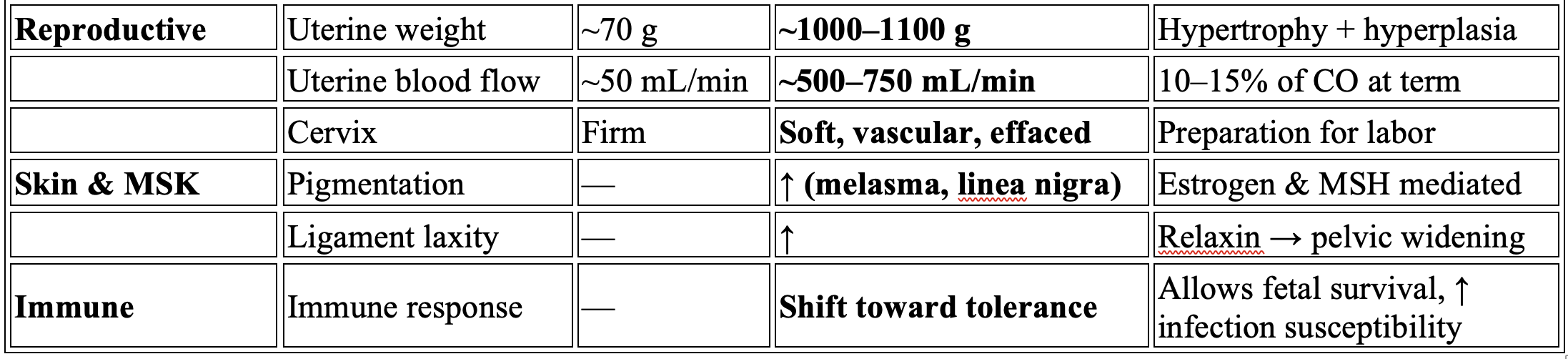
A few important highlights are the stresses put on the heart, kidneys and immune systems, not to mention that pregnancy increases risks of forming blood clots in veins that can become fatal emboli. The immune system is “weaker” which makes pregnant people more likely to become sicker from illness (viruses, bacterial infections) than they would be if they were not pregnant. We see this with influenza, the H1N1 virus, COVID-19 virus, as a few examples. If these are merely the “standard” changes that happen to the body during pregnancy, consider the risks of what happens when unpredictable complications develop. Complications such as hyperemesis gravidarum, gestational diabetes, hypertensive disorders such as preeclampsia can happen during any pregnancy and without warning—hence the existence of the aforementioned healthcare specialties. Many other complications can happen at any time during pregnancy, giving birth, or during the postpartum era, so who should be the one to decide what health and life risks they will undertake in pregnancy? Certainly not a senator or Supreme Court justice. Certainly we as human beings MUST insist that only the pregnant person will decide what health and life risks they will undergo. Afterall, if I need surgery to remove my appendix, no one is looking to my state’s attorney general about whether I have permission to have my appendix removed. (No, a pregnancy is not an inflamed appendix any more than an inflamed appendix is a broken bone—but needing an appendectomy, needing a cast, and needing an abortion are all aspects of healthcare.)
One hundred percent of abortions are medically-indicated because someone is pregnant and does not want to be pregnant. They do not want to incur the very real risks to health and life that pregnancy and/or giving birth carry. As with any medical condition that alters one’s physiology, whether it’s high blood pressure, diabetes, or bleeding that requires surgery and possibly a blood transfusion, the decision to accept or refuse treatment should be made by the person affected and should be based on the risks and benefits of all options available. This is known as informed consent and it is one of the cruxes of health care provision. Informed consent is described by the American Medical Association as follows:
Informed consent to medical treatment is fundamental in both ethics and law. Patients have the right to receive information and ask questions about recommended treatments so that they can make well-considered decisions about care. Successful communication in the patient-physician relationship fosters trust and supports shared decision making. Transparency with patients regarding all medically appropriate options of treatment is critical to fostering trust and should extend to any discussions regarding who has access to patients’ health data and how data may be used.
The process of informed consent occurs when communication between a patient and physician results in the patient’s authorization or agreement to undergo a specific medical intervention.
Note that nowhere in the American Medical Association, the World Health Organization, the American College of Obstetricians and Gynecologists nor in any publication from other academically reputable organizations is it recommended to consult one’s senator, governor, attorney general, or any persons lacking in medical training and education for consent to medical procedures and interventions. Just as with ending a pregnancy, continuing a pregnancy and giving birth is a decision that should be made using informed consent. When legislators make evidence-based healthcare illegal (*cough* abortion; *cough* gender affirming care), they force pregnant people to risk their lives and give birth against their will. Not only is this an egregious violation of informed consent but also violates all the medical ethics. How is there any justification to force someone to undergo very real risks to health and life against their will? No one possesses the ability to see the future so no pregnancy outcome can be predicted, but the risks are always there. Only the pregnant person should be deciding to what extent they put their own health and life at risk.
Abortion is healthcare. Infertility care is health care. Prenatal care is healthcare. These areas of healthcare require education and training in medical practice, not law practice. I don’t walk into court rooms and start filing motions and objecting to testimony, so our judicial branch needs to stay out of the clinic room where they are harming patients by withholding evidence-based medical care.
Some guy designed the room I'm standing in
Another built it with his own tools
Who says I like right angles?
These are not my laws, these are not my rules
-Ani DiFranco
Citations:
1. Cunningham, F. G., Leveno, K. J., Bloom, S. L., Dashe, J. S., Hoffman, B. L., Casey, B. M., & Spong, C. Y. (2022). Williams obstetrics (26th ed.). McGraw Hill.
https://accessmedicine.mhmedical.com
**I must emphasize that abortion care is not the only area of medicine that is being politicized and used as a tool by the patriarchy to harm marginalized groups. Gender affirming care is under attack and is another area of evidence-based medicine that saves lives. It is medicine that must be protected and made accessible so people can live healthy and fulfilling lives. I have seen the life-saving effects firsthand.